
WPP is an Author’s Partner.
Taking you work from manuscript to print since 2016

LEGACY STORIES – 2024/25
Excerpts at the bottom
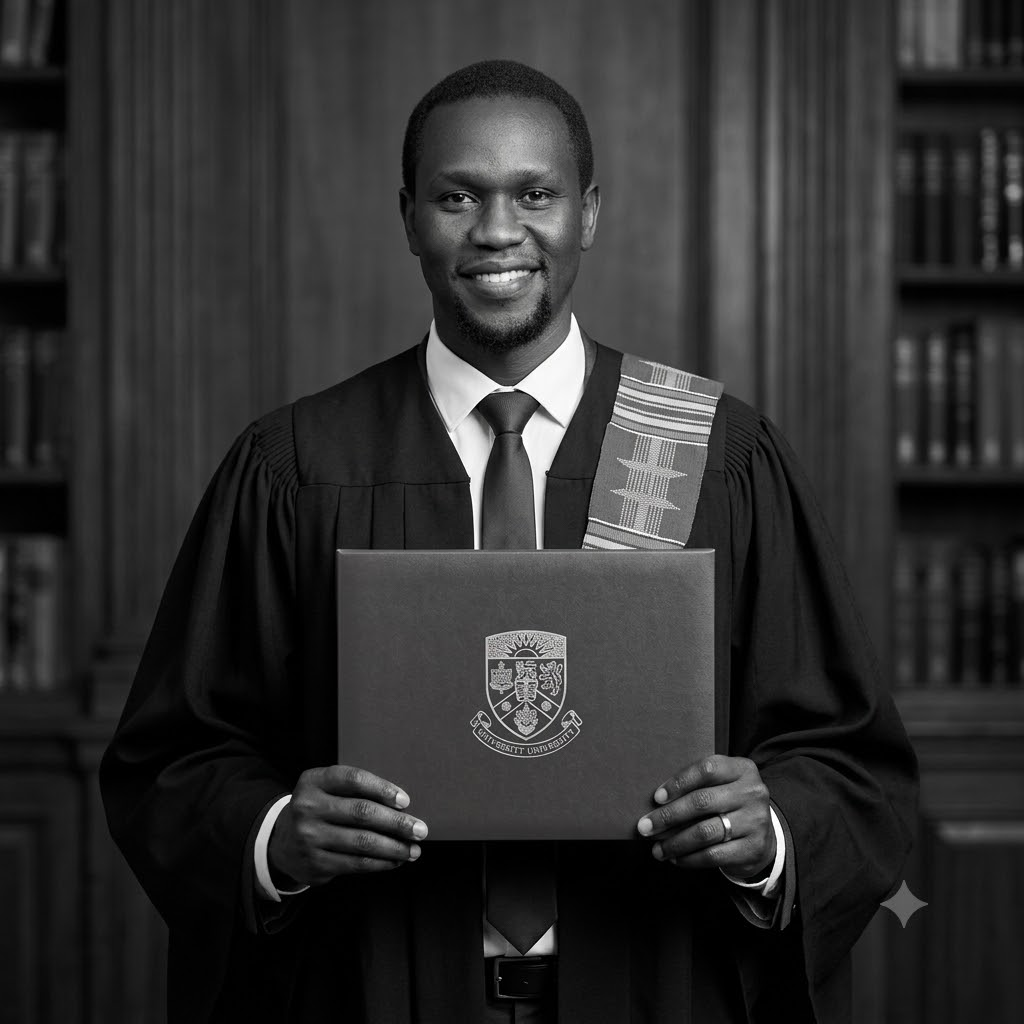
Preview Below

Preview Below
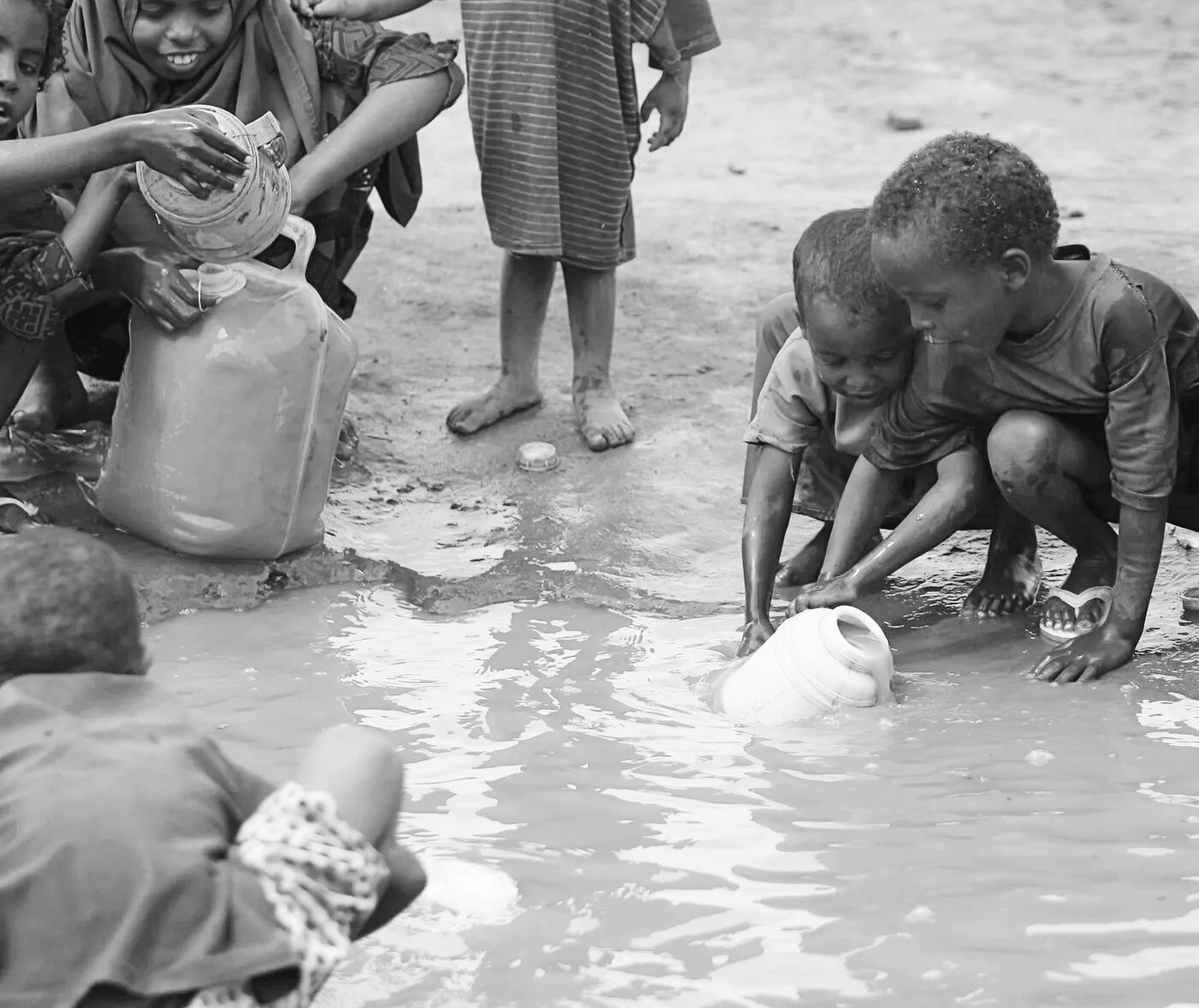
Privately Published
Preview:
A Hungry Man – A Hunting Man (2024)
Poverty, Violence, and Dedication. The lives of the Turkana people of Baringo, as seen through the eyes of Investment Banker J.L..
(All styling as requested by the subject. Full names concealed for privacy)
From Chapter Four
Food was tactical when J.L. was in school. Your parents come to visit you and bring you KFC? You are one of the rich kids. We will tax you. Give us food. You’re late to your breakfast bread and the seniors are feeling peckish? Tardy. We’ll eat your food. You want your clothes cleaned, or are bartering for some calligraphy on a sentimental missive to send to the neighboring girls’ school? Investment. Can you pay in food? Biscuits. Hot-dog-buns. Smokies. Pastries. Chapatis. Dried fruit, nuts, milk, soda or juice. Your days are better when you have food. You constantly want food. Your true traits are betrayed by how you act with and around food. Look at the tuck-shop. It’s 7 feet tall and shaped both rectangular and hexagonal. It’s red like the logo on the Coca-Cola bottle. When in school you called it a canteen, inside you cannot catch a view of the food ‘cause of all the teenage bodies in front of it blocking. The little store is lined with grills, it slopes inwards at the front near you, gives room for your legs to bend into and a hard counter for your torso to prop yourself up good. Assuming the thrashing crowd does not crush you into an early end, the canteen will offer you a tiny window through which to place your order. Like a Greek myth, there is always either a sweet and gentle clerk or a cantankerous attendee scowling back at you, never in between. Stand and speak with your chest, kijanaa, you youth. You better have your arms outstretched like tendrils ‘cause this food-box is packed to the gills, and if your head could fit in the space, whether you were just in line or you were literally next, you’d push it in with haste. Yes. See, it’s the Friday lunch bunch, escaping the great disappointment of succotash. The plates were left full. You were late to the rush, G, and now there’s a rabid crowd at the shop, jostling and jocking to push money through that slot and order for themselves a middle-class smokie, a commoner’s mandazi, a bourgeoisie Twinkie, or that exclusively 1-percenter combo of the whole menu above, plus a Fanta baridi. Cold. If you are late all the goods will be out. Sold. And what are you gonna do then? Eat your pocket-money? You would, if it was food. No, dude. Get in there. Elbow that guy standing loose. Push the jamaa in front of him talking rude. Weasel your neck underneath the smelly arm of that fellow form 2. He might not understand right now but he’ll eventually remember this was for food and forgive you — you’ll forgive his armpits too. Now you’re almost next. Your body can’t move. You are abreast with the rest, if from the window a little offset. But you pushed your wrist through every crack, crevice, mwanya, and lacuna present, and can finally feel your fingers walking themselves along the gaps of the grill, carting your shillings ever closer to the till. The money is in bills. The currency is a hundred or a fifty, and things are real. Do not question the process. This single dollar or even half buck is your meal. And while the vagaries of high school have made it more or less a pipedream for a growing boy within its walls to ever truly have his fill, by the GODS! your hand WILL make it to that window and you WILL buy yourself that modest lunch of 30-shillings for their 6-mandazis and 20-shillings for their mini-packet of milk. YOU WILL! You feel? Yes, indeed, for you and your ilk can suddenly really feel six hands like sand-paper grab your form 1 faces from behind. Seniors in the rugby team come to remind: You! Rabble! This food aint for you! This food is for mine! The rowdy sport ruffians bowl through your menagerie. They tell you kids to be quiet, or they’ll pick you like ticks from the tuckshop’s belly and toss you back in the pile. 50 shillings in your palm. I guess this lunch you don’t dine. Do not swear by the gods. Show up earlier than time. Food is force. The force is unkind.
Preview:
Afro Nesting Doll (2022)
African. American. African American. Three lives, one United States.
(All styling as requested by the subject. Full names concealed for privacy)
From Chapter Two
Dr. E.H. Samba Diallo came to United States of America in 2005, one of the 400,000 or so African immigrants who landed on Uncle Sam’s fair shores between 2000 and 2006. Pronounced JhAH-Lo, Dr. Diallo, came to the US to marry his American partner after 12 years and 1 child together in France. He would be easy to pick out in most American crowds, 6 foot 3 inches tall with horn-rimmed glasses, clear skin the dark brown of coffee and a distinct Francophone accent delivering the warm wisdom of the stereotypical African intellectual, a more introspective French-West African Morgan Freeman.
Dr. Diallo’s office at the university was sparsely furnished. He teaches Wolof, and advanced courses in Islamic and African studies. The radiator blew warm air into the room on occasion, fluttering a few stray sheets on his desk. Dr. Diallo was curled over himself in a pea jacket, his arms and legs piled on top of each other on the edge of his seat. His dress and posture seemed to suggest that he was unaware of the cozy temperature. Senegal, where he lived all his life prior to moving to France, is 120 miles farther from Kenya, my home country, than Spain is from the USA. My French is rudimentary and my Wollof nonexistent, just like his Kiswahili, but you would not have guessed it from the ease of our interaction.
According to the PEW Research Centre’s Social and Demographics Report on the Foreign Born Black Population, Senegal makes up much less than 1 percent of the total African immigrant population in the US. (Nigeria leads with 6 percent, Kenya comes in 6th with 3 percent.) But among many African immigrants, myself included, borders melt away once outside of our respective countries. I considered it the closeness of foreign isolation. Prof. Diallo described it more elaborately.
“Africans have Triple identities: The Colonial; the Religious; and the African” he began.
His colonial identity would be French. France officially took Senegal for itself in 1895 during Europe’s bloody scramble to call dibs on vast chunks of a continent that had long had its own dibbers. In 1905, they proclaimed Dakar, Senegal’s current capital, the capital city of “French West Africa”, a federation that avariciously spanned most of West Africa, from the Eastern shores of the Atlantic in Liberia to the Western tip of central Africa in Niger.
Dr. Diallo, like most people across West Africa, is Muslim, the second of his identities. Having long been present in Africa through commerce and writing, Islam found it easier to stay intact and unopposed within the countries of “French West Africa”. Ninety-two percent of Senegal’s population is Muslim. In contrast, Nigeria’s population, being surrounded by former French colonies but itself colonised by the British, is only forty-five percent Muslim.
In France, Dr. Diallo became disillusioned with his religion. Midway into mentioning this his left hand took temporary flight off his lap and waved as if flicking floating scripture away.
“The French don’t practice religion,” he said and I wondered whether he lost his to fit in.
If he did, he was destined for more disappointment as French society did not accept him much even then.
“I thought that I was French for the longest time but losing my religious identity coincided with losing my claim to France. I had a feeling I was not welcome in that country.”
The Senegalese people speak a different dialect of French from the French, coupled with the differences in culture and religion, it made sense to me that Dr. Diallo would feel out of place in a foreign land. It did not make sense that he had not expected to.
“Part of my culture is French, even if I do not like it.”
France had an assimilation program in the 1950s that gave the Africans they took there a path to citizenship once they adopted the French language and culture. Leopold Sedar Senghor, Senegal’s first president, was himself assimilated into France, a citizen writing poetry and philosophy in French and retiring to Paris after he left office. The program was long gone in France by the time Dr. Diallo went there to study but in Senegal its effects are woven into the people’s DNA. At first, it boggled me how tied he was to his former colonial masters. Later I thought back to my afternoon teas and the “Cheers” I add at the end of conversations (in fluent English, mind you)- all keepsakes of a membership in the commonwealth. Neither Dr. Diallo nor I could claim to be free of the cross-generational Stockholm’s Syndrome Africa is afflicted with.
Stripped willingly of his claim to Islam and unwillingly of his claim to France, I asked him the big “I” question.
“What did you identity as then?”
“As an African, but I thought I was French.”
“Has identifying as African spared you any ridicule?”
He paused for a second.
“In France, they say everybody is equal but when you’re looking for a job you won’t find one…” The racial hierarchies of France drew no distinction between the two categories. Once an assimilated citizen, you got the full package, and discrimination was not sold separately.
In America, things were different for him. As they tend to be.
The US is the world’s most successful exercise in cultural and ideological diversity, a statement that stands both as praise for America’s efforts and criticism for our collective low standards.
Preview:
Halfway To Damascus (2025)
A sheltered son risks life and health in the desert to gain his own identity. A father-son portrait on struggle and reconciliation.
(All styling as requested by the subject. Full names concealed for privacy)
From Chapter One
He did not want to be a doctor, but he could not be a failure, so at the age of 26, Franz O. went on medical placement to the town of Nyahururu.
You would require public means to get to the town from the capital, and the stop from which most take these means is “The Tea Room”.
Deriving its name from a once-prominent hotel and café from the British post-colonial period, The Tea Room would become a central gathering spot for travelers, particularly those heading to far-off destinations like Meru, Nakuru, or Nyahururu. It was a land port, providing rest, relaxation, and a wee bit of tea and refreshments.
In the modern day, however, the once prominent stop more closely resembled an auctioneer’s training ground. Crass touts in red and blue uniforms spread out across the cars coming and going, extolling the minor-savings or shorter trips of one bread-loaf-shaped vehicle over another. In some way, Tea Room still served a restful and rejuvenating purpose— weary and famished travelers could yet find a hot beverage and a baked good for their troubles. However, as the area evolved into a hub for long-distance travel the port had taken on a more…rustic persona. In its older age, the little square’s walls, once bright and cream colored, had turned a sulking grey, the victim of a hundred thousand smoke-outs from matatus taking off. The curbside by the road had been replaced, but only at parts, and the rest of the path had chunks missing, the toothless look of a street subjected to the endless friction of shoes rubbing on concrete. In time, the bus stop had become a half-rest spot, half-parking lot for souls journeying both far, and nowhere at all. Some homeless locals had set up sleeping cots next to the roadside levees, temporary shelters from which they would frequently get evicted as the municipal council sought to make the atmosphere at least more hospitable to the thousands of city commuters on their way; commuters who had barely completed the first legs of their trips before they had to board another soot-spewing bus, bundled next to each other, longing see their loved ones in a district far removed from Nairobi. At peak hours, when the supply of vehicles could not match the exponential demand for them, it was not uncommon to witness a middle-aged aunty hurl her luggage through an open window to an undefined passenger inside, desperate to book a seat for the little child she was invariably traveling with, shouting “Nishikie hio kiti!”, as she elbowed a fellow aunty away.
Not that Franz would have known.
He was not taking a bus.
Despite the decay of the cafe building and the wild clamour below however, Tea Room remained a vital part of the country’s transportation network. And so the name endured, becoming synonymous with the bus stage itself.
He was taking private means, personally driven to Nyahururu by The Justice, his father — of the Kenyan High Court.

J. Lowio
A Hungry Man – A Hunting Man